
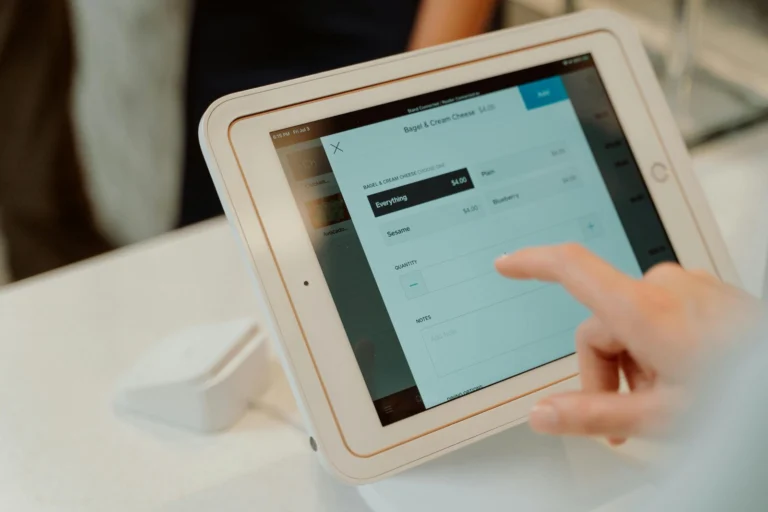
When a business outgrows a basic terminal, the problem is rarely just hardware. Owners usually need a clearer way to manage sales channels, permissions, deposits, and daily reporting. For businesses in Dunwoody, that decision has to account for restaurants, professional offices, retail centers, and service businesses working around Perimeter-area commercial districts. We begin by documenting how customers pay, where employees encounter friction, and which information managers need after the transaction. From there, we can evaluate pos systems & merchant accounts as part of a complete operating workflow rather than an isolated product purchase.
Turn Fees Into Comparable Numbers
The monthly bill is the outcome of many variables, not a single rate. We examine volume, average ticket, how the card is presented, the types of cards customers use, recurring charges, and the cost of the equipment environment. When possible, we compare the present and proposed plans in actual dollars. That format makes hidden assumptions easier to challenge and gives the owner a practical basis for deciding whether switching is worth the effort. In this case, the comparison is framed around approval and hardware should be designed as one rollout rather than separate purchases. Businesses ready for a side-by-side review can request a custom payment review.
Dunwoody’s dual commercial identity ( as both a dense Perimeter-area office and retail market and a residential community with neighborhood retail along Chamblee Dunwoody Road and Mt. Vernon Road ) means local businesses need point-of-sale systems that handle very different customer flows. The midday rush at restaurants near Perimeter Summit and Ravinia puts throughput at a premium between 11 a.m. and 1:30 p.m., when office workers from corporate campuses including State Farm’s Dunwoody operations and Cox Enterprises descend on adjacent dining. Evenings and weekends shift the pattern toward Georgetown and Dunwoody Village residents looking for neighborhood dining and local retail. A POS system must accommodate both peaks cleanly. Merchant account setup in Dunwoody also requires care around the city’s restaurant density: the same business classification codes that trigger lower interchange for fast food can create friction for merchants whose menus or formats are harder to classify. Dunwoody businesses that operate outdoor seating along Ashford-Dunwoody Road need wireless terminal capability that stays connected through the Perimeter corridor’s congested wireless environment. TWC Payments builds merchant accounts around the actual SIC code and transaction profile of each Dunwoody business, not a default classification that may result in higher interchange than necessary.
A Better Question Than ‘Which Processor?’
We start with the payment moments creating the most friction for a Dunwoody operator that wants modern equipment and straightforward account terms without losing personal service. During this POS systems and merchant accounts review, we ask where customers pay, who handles refunds, how deposits are checked, and which steps staff complete manually. The result is a clearer view of the business issue, whether it centers on expense, tools, payment location, records, risk, or assistance. They also keep the recommendation tied to the page-specific priority that approval and hardware should be designed as one rollout rather than separate purchases, rather than to a generic feature list. Additional channel and technology information is available in our payment solutions overview.
Why Location Changes the Payment Plan
Dunwoody sits beside a major Perimeter business district and supports restaurants, professional offices, healthcare providers, retailers, and service companies that interact with both local residents and regional customers. A payment system may need to support a busy lunch period, a professional invoice, a recurring client relationship, and mobile acceptance without making reporting fragmented. To coordinate the merchant account and the equipment, we consider the physical payment point, peak periods, ticket size, staff movement, and the distance between the office and customer. A counter-focused setup may not fit a team covering Dunwoody and the wider Perimeter business area. Local context matters because those operating conditions directly affect POS systems and merchant accounts, not through repeated location language.
A Practical Payment Setup
For restaurants, offices, retailers, and service organizations in Dunwoody, the core objective is a coordinated merchant-account and POS rollout so the business can coordinate the merchant account and the equipment. Final configuration is shaped by account terms and selected technology, but we routinely consider these functions:
- Gather ownership, banking, business, and expected-volume information
- Select payment channels and equipment
- Review pricing, funding, security, and support expectations
- Complete configuration, testing, and staff onboarding
These are planning points rather than a claim that every product includes every function. We use them to narrow the technology and account structure to what the business will actually operate. For restaurants, offices, retailers, and service organizations in Dunwoody, the deciding standard is whether the setup supports the goal to coordinate the merchant account and the equipment.
What Onboarding With Us Includes
Our setup process treats the merchant account, technology, and people as one project. We learn the current process, explain the proposed costs, confirm the equipment plan, and prepare the working environment. Staff members practice the tasks appropriate to their roles before launch. Continued human support helps the business handle questions without rebuilding the entire process every time an exception appears. For this Dunwoody project, we keep the sequence tied to the goal to coordinate the merchant account and the equipment.meet our payment specialists
Support After the First Transaction
We are a small business serving other businesses, so our approach is personal and consultative. Our approach combines clear pricing, reliable payment tools, qualifying next-day deposits, security and dispute guidance, flexible account terms, and 24/7 access to human support. For a Dunwoody owner, that means a named relationship stands behind the system. We include next-day funding in our service model, while the final schedule remains tied to underwriting and account terms. We focus on a documented business case instead of creating pressure to switch.why businesses choose TWC Payments
Useful Reading for a Better-Informed Decision
Independent sources add context that makes a provider conversation more productive. For this Dunwoody review of POS systems and merchant accounts, the following official and industry resources provide useful background on local operations, security, finance, or the payment channel itself:
- City of Dunwoody resources
- S. Small Business Administration financial management guidance
- PCI Security Standards Council merchant guidance
- Federal Reserve information on payment services
TWC Payments also sets up and supports POS systems for businesses in nearby Georgia communities, including Sandy Springs, Alpharetta, Marietta, Kennesaw, and Lawrenceville. For a full look at the systems we deploy and configure, visit our POS systems page.
Frequently Asked Questions
Q: Which should a Dunwoody business evaluate before choosing a POS system?
A: We start with transaction volume, checkout locations, staff roles, refunds, reporting, internet reliability, and any need for mobile or online payments. A feature list is less useful than mapping the tasks employees perform during a normal shift. We then recommend a configuration that supports those tasks without loading the business with equipment or functions it is unlikely to use. During a Dunwoody review, we apply this guidance to the business’s real transaction flow rather than a hypothetical setup.
Q: Can a new POS setup be introduced without disrupting daily sales?
A: The transition should be planned before the old workflow is retired. We coordinate account approval, equipment configuration, testing, user permissions, receipt settings, and staff practice. The exact sequence depends on the existing system, but the goal is to have employees comfortable with the core steps before the new setup becomes the only way to accept payment. The recommendation is then documented around the Dunwoody team’s roles, payment locations, and customer expectations.
Q: How do reporting and deposits fit into the POS review?
A: We discuss how managers reconcile sales, identify refunds, review employee activity, and compare deposits with transaction records. Reporting needs vary by business, so we focus on the information the owner or bookkeeper actually uses. Funding timing and account conditions remain subject to approval, but expectations should be explained clearly before launch. We use the business’s own Dunwoody workflow to decide which details are essential before launch.